


 Sign Up For City Newsletters
 Text Size
 Translate
Home Safety Tips
Similar in nature to a Smoke Alarm, a Carbon Monoxide Alarm is designed to warn you if your family or customers are in danger. Carbon Monoxide (CO) is a colorless, odorless deadly gas. It is virtually unrecognizable; it can do its damage before you realize it’s there.
Carbon Monoxide detectors must be installed within fifteen feet (15') of each room used for sleeping.
Read more about carbon monoxide alarms and smoke alarms.
The City of Evanston authorities are increasingly concerned about a surge in structure fires linked to e-bikes stored and charged inside residential dwellings. As electric bicycles gain popularity for their eco-friendly and efficient transportation, our community must be aware of the potential dangers and adopt best practices to ensure safety.
The primary contributors to fire incidents directly attributed to e-bikes are the result of improper charging, storage, and maintenance. To address this issue and safeguard our community, the following essential safety concerns and best practices have been identified:
Proper Charging and Storage
E-bike owners should always use the manufacturer-approved charger and charge the bike in a well-ventilated area. Never leave the e-bike unattended while charging, and avoid charging it near flammable materials such as paper, fabrics, or cleaning chemicals.
Battery Maintenance
Regularly inspect the e-bike's battery for any signs of damage, wear, or leaks. If any issues are identified, the battery should be replaced immediately, and old batteries should be disposed of responsibly.
Designated Charging Area
It is essential to designate a specific and safe area within your home or garage solely for e-bike charging. This area should be clear of potential fire hazards and equipped with a fire extinguisher and smoke alarm.
Fire Safety Equipment
Every household with an e-bike should have functional fire extinguishers and smoke alarms strategically placed throughout the property. Knowing how to use fire extinguishers effectively is crucial for emergency preparedness.
The Evanston Fire Department is committed to enhancing public safety and has planned various initiatives to educate residents on e-bike safety. Our community's safety remains our utmost priority as we witness a concerning rise in e-bike-related fires. By promoting responsible charging, proper storage, and regular maintenance, we can collectively reduce the risk of such incidents. Together, we can make The City of Evanston a safer place for everyone.
The Evanston Fire Department recommends (but does not require) that every residence (single family home, individual condo units, individual apartments, etc.) have at least one fire extinguisher.
Commercial buildings (businesses, multi-unit residences with large common areas, etc.) are required to have at least one fire extinguisher available in an easily identifiable location.
Read more on fire extinguishers.
Fire pits are known to be a great source of warmth and ambience. As the popularity of fire pits increases, fire safety has become even more important. There are many factors to consider when setting up and using a fire pit. The use of fire pits is permissible when all City of Evanston regulations are followed.
Safety Tips:
- Keep away from flammable material and fluids such as gasoline, diesel fuel, kerosene, and charcoal lighter fluid or vehicles while in use.
- Do not use flammable fluids such as gasoline, alcohol, diesel fuel, kerosene, and charcoal lighter fluid to light or relight fires.
- Exercise the same precautions you would with an open fire.
- Do not allow children to use the fire pit. Keep children and pets away.
- Do not wear flammable or loose-fitting clothing such as nylon.
- Before starting the fire, make sure that the lid will still close to extinguish the fire in case of emergency. Do not overload.
- Before you light the fire, check the wind direction.
Fire Prevention Code 307.5 Fire Pit Regulations - The use of fire pits will be allowed provided the following regulations are complied with:
- For clarity, a fire pit includes a permanent below-ground fire pit, a permanent grade-level outdoor fireplace, or a portable outdoor fireplace, all intended to contain and control outdoor wood fires.
- Portable fire pits, constructed of steel, brick, or masonry, shall be used in accordance with the manufacturer's specifications and safety guidelines and must be placed upon a non-combustible surface.
- Only natural seasoned firewood or commercial logs may be burned.
- The fires in fire pits shall be kept manageable.
- The use of the fire pit must be attended to and supervised by a competent adult property owner until the fire has been completely extinguished. A legal resident/tenant of a property may use a fire pit in accordance with this ordinance as long as the property owner or assigned management company grants written permission to the legal resident/tenant. The fire pit must be attended to and supervised by the legal resident/tenant until the fire is completely extinguished.
- A portable ten (10) pound ABC-type fire extinguisher or other approved extinguishing equipment, such as a garden hose, bucket of sand, or dirt, must be readily available.
- The use of a fire pit that creates a hazardous or objectionable condition shall be prohibited. The code official is authorized to order the extinguishment of a fire in a fire pit creating a hazardous or objectionable condition.
- The use of the fire pit shall not be located within ten feet (10') of a structure or any combustible material. In no case shall the appliance be located directly under overhead combustible construction.
- The use of the fire pit shall not cause any building fire alarm system to activate.
- Guidelines when using a fire pit shall include common sense, respect for neighbors, and neighborhoods.
Grilling in the backyard can make for a fun time, but make sure you take proper precautions!
Safety Tips:
- Never grill in enclosed areas – carbon monoxide could be produced.
- Before using a grill, check the connection between the propane tank and the fuel line. Make sure the venture tubes – where the air and gas mix – are not blocked.
- Do not overfill the propane tank.
- Do not wear loose clothing while cooking at a barbecue.
- When using lighter fluid, do not add it to an already lit fire because the flame can flashback up into the container and explode.
- Keep all matches and lighters away form children. Supervise children around outdoor grills.
- Dispose of hot coals properly – douse them with plenty of water, and stir them to ensure that the fire is out. Never place them in plastic, paper or wooden containers.
Fire Prevention Code 308.3.1.1: Open-flame cooking grills - Barbecue grills shall not be used on any stairs or porches that serve as a means of egress. The use of barbecues will be allowed on balconies or at ground level, provided the following regulations are complied with:
- The use of a cooking grill that creates or adds to a hazardous or Objectionable situation shall be prohibited.
- Read the owner's manual for safety guidelines.
- The use of the barbecue shall not cause the building's fire alarm System to activate.
- A portable fire extinguisher shall be located in close proximity to the barbecue, but not affixed to the grill. The fire extinguisher shall be at
At least a 10-pound ABC-type extinguisher. - Extreme caution shall be exercised when lighting the barbecue to prevent flames from elevating to an excessive height.
- Hot ashes or cinders shall be deposited into noncombustible receptacles free of all combustible material and away from combustible construction.
Holiday Trees
- Selecting a Tree:
- Needles on fresh trees should be green, and the trunk should be sticky to the touch.
- Bounce the tree against the ground, if many needles fall the tree is not fresh and a safety hazard.
- Caring for the Tree:
- Do not place your tree close to a heat source, heat will dry out the tree and can be easily ignited by flames.
- Keep the tree stand filled with water.
- The tree shouldn’t be up longer than two weeks.
- Disposing of the Tree:
- When the tree becomes dry, discard it.
- The best way is to take it to a recycling center or find out when the City is collecting them.
Holiday Lights
- Inspect holiday lights each year for frayed wires, bare spots, and broken or cracked sockets before putting them up.
- Use only lighting marked with an approval from a testing laboratory.
- Do not overload electrical lights: Do not link more than three light strands, unless the directions indicate it is safe.
- Do not leave holiday lights on unattended.
Holiday Decorations
- Use only nonflammable decorations.
- Never put wrapping paper in a fireplace.
Candles
- Avoid using lit candles
- If you do use lit candles, make sure they are in stable holders and place them where they cannot be easily knocked down.
- Never leave the house with candles burning.
- Never put lit candles on a tree.
According to the NFPA, cooking was involved in an estimated 156,400 home structure fires that were reported to U.S. fire departments in 2010. These fires caused 420 deaths, 5,310 injuries and $993 million in direct property damage. Cooking caused 44% of reported home fires, 16% of home fire deaths, 40% of home fire injuries, and 15% of the direct property damage in 2010.
Safety Tips:
- Do not leave the kitchen while you are cooking.
- If you have to leave the kitchen, turn the stove off or take something like a spoon or oven mitt as reminder food is on the stove.
- Never cook if you are sleepy, intoxicated or heavily medicated.
- Turn all pot handles inward. Small children and animals can bump into them spilling hot substances and causing someone to be burned.
- Keep stovetops clean and clear. Keep all appliances free of grease buildup. Move items such as oven mitts away from heat sources.
- Keep children away from appliances when cooking. If older children are allowed to cook, teach them safe cooking practices and watch them carefully.
- Keep pets away from the stove.
- Wear short of tight fitting sleeves while cooking. Use caution when reaching over the stove for other items. Do not store flammable items above or behind the stove.
- Never stand in or near water while using an electrical appliance.
- Check regularly for frayed cords to appliances. Plug one appliance in an outlet at a time.
- Do not use defective appliances. Keep appliances properly maintained.
- Keep an ABC dry chemical fire extinguisher near the kitchen.
- Never put metallic materials in the microwave, sparks given off can result in a fire.
- Remember steam escaping from a pan or container can cause severe burns.
Heating equipment fires are the second leading causes of fire deaths in American homes, according to the National Fire Protection Association (NFPA). When purchasing new heating equipment, NFPA advises selecting equipment with the mark of an independent testing laboratory. Install and maintain heating equipment correctly, and be sure it complies with local fire and building codes. Correct installation, maintenance and fueling go a long way towards preventing heating fires.
Safety Tips:
- Do not leave portable or space heaters unattended.
- Regularly clean chimneys in fireplaces and woodstoves.
- Place things that can burn far away from space and portable heaters.
- Flaws in design, installation or use are a major risk to you and your family’s safety.
- Make sure liquid or gas heaters are fueled properly.
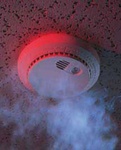 A working smoke alarm increases your chance of surviving a house fire by more than 50%.
The Evanston Fire Department reminds you to change your batteries in your smoke alarm(s) as you change your clocks for Daylight Savings Time. Change your clocks, change your batteries!
Read for more information on smoke alarms and carbon monoxide alarms.