


 Sign Up For City Newsletters
 Text Size
 Translate
Sexually Transmittable Infections & HIV
Sexual Health and Well-Being Pop-Up
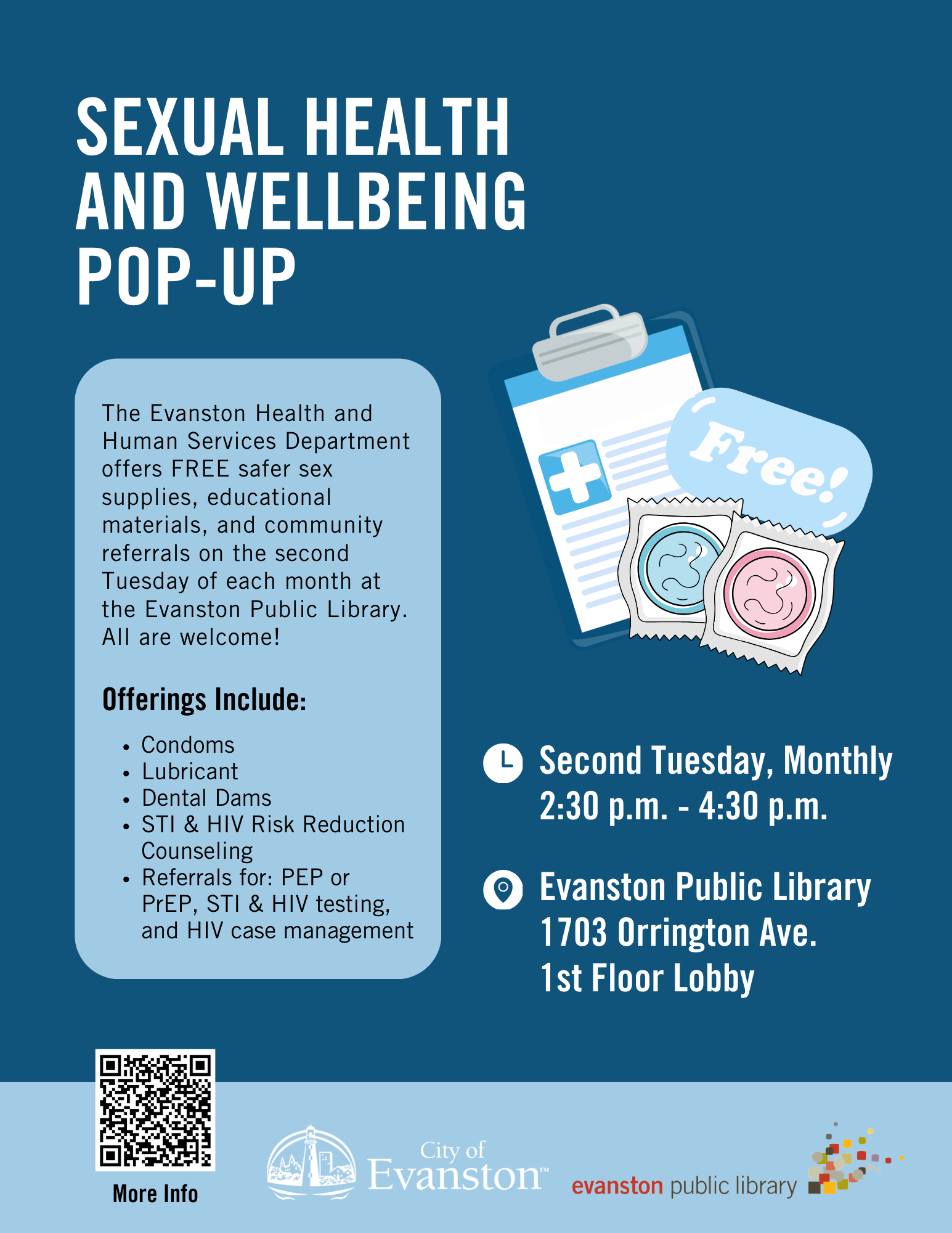
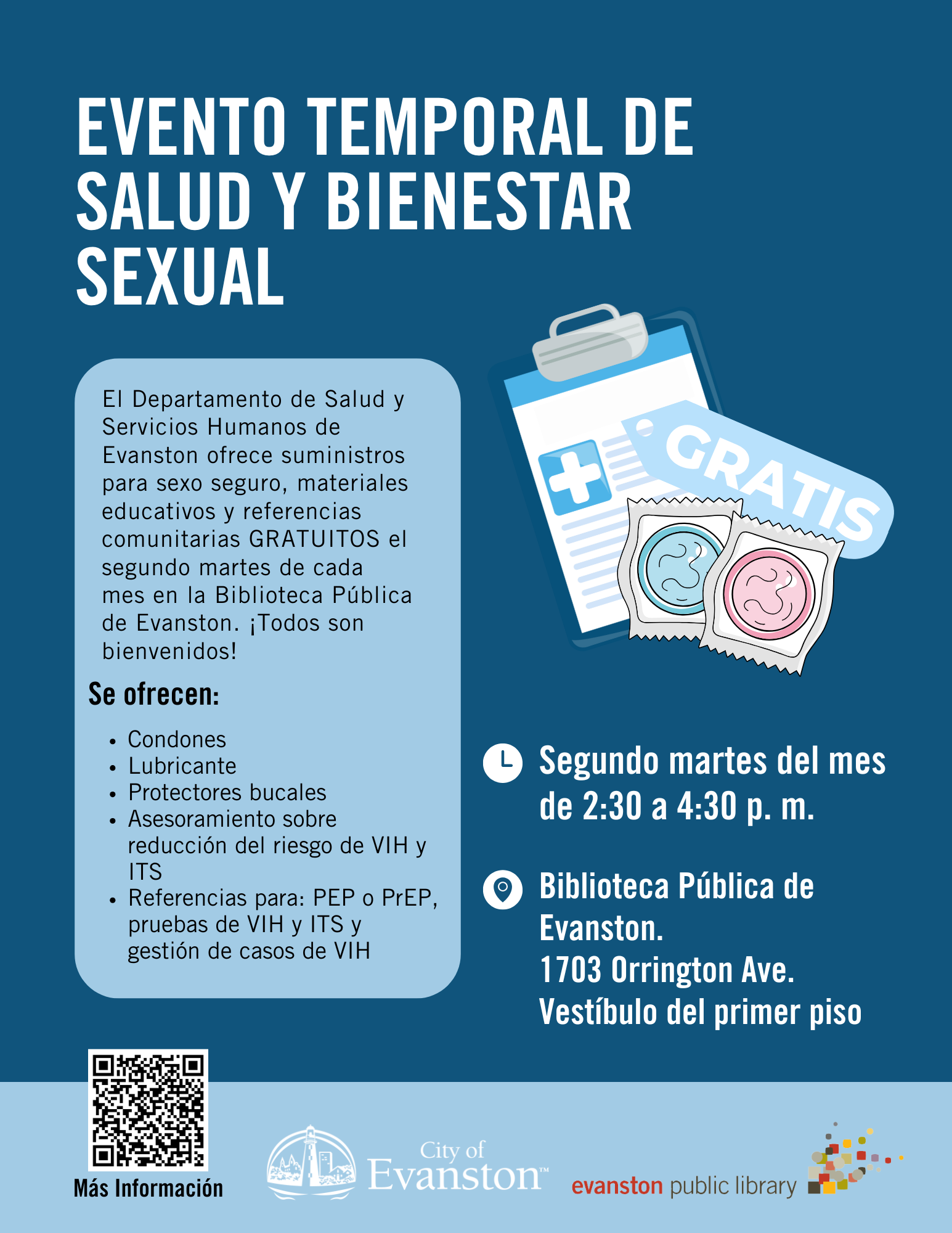
The Evanston Health & Human Services Department offers free safer sex supplies, educational materials, and community referrals on the second Tuesday of each month at the Evanston Public Library from 2:30 p.m. to 4:30 p.m. Offerings include condoms, lubricant, dental dams, STI & HIV risk reduction counseling, and referrals for PEP or PrEP, STI & HIV testing, and HIV case management.
Through a partnership between the City, Evanston Public Library, and Howard Brown Health Center, community members can attend a screening event at the Evanston Public Library on the fourth Tuesday of every month.
Services include: HIV prevention counseling, rapid HIV screening, confidential screening for syphilis, gonorrhea, and chlamydia.
Please visit Howard Brown Outreach Services for more testing sites and information.
Services include: HIV prevention counseling, rapid HIV screening, confidential screening for syphilis, gonorrhea, and chlamydia.
Please visit Howard Brown Outreach Services for more testing sites and information.
The City of Evanston Health and Human Services Department offers free safer sex supplies sent through the mail, at events, and for pick up at the following local locations:
- Reese’s Barber Studio- 1618 Emerson St
- Church Street Barbershop - 1905 Church St
- Ebony Babershop - 1702 Dodge Ave
If you have questions, want to talk to someone about where you can get tested, or just want more information on STIs or HIV, call the Evanston 3-1-1 service or the Illinois HIV/STI hotline at 1-800-243-2437 to speak with a trained counselor in English or Spanish.
To locate free or low-cost STI and HIV testing and other sexual health services near you, type your zip code into the search box below or at the following link: https://gettested.cdc.gov/.
Mpox is an illness caused by a virus that can spread through close contact, including sex. People with mpox often get a rash and other symptoms. There is a vaccine that can help prevent mpox infection. Talk to a healthcare provider to learn if it is recommended for you. For more information and resources, please visit the Illinois Department of Public Health's Mpox Website.
There are many tools that can prevent HIV. Some things that decrease the chance of getting or transmitting HIV include using condoms the right way every time you have sex, getting tested and treated for STIs, limiting your number of sexual partners, and never sharing needles, syringes, or other drug injection equipment.
People who are not living with HIV can use PrEP (pre-exposure prophylaxis) and PEP (post-exposure prophylaxis) to prevent HIV. When someone is exposed to HIV through sex or injection drug use, these medicines can work to keep the virus from establishing a permanent infection. For more information about PrEP for HIV prevention, visit the Illinois Department of Public Health's Pre-Exposure Prophylaxis website or call 311.
People living with HIV can prevent transmitting HIV to others by taking HIV treatments to get to and keep an undetectable viral load. To find HIV treatment and care services near you, visit HIV.gov's HIV Services Locator or call 311.
People who are not living with HIV can use PrEP (pre-exposure prophylaxis) and PEP (post-exposure prophylaxis) to prevent HIV. When someone is exposed to HIV through sex or injection drug use, these medicines can work to keep the virus from establishing a permanent infection. For more information about PrEP for HIV prevention, visit the Illinois Department of Public Health's Pre-Exposure Prophylaxis website or call 311.
People living with HIV can prevent transmitting HIV to others by taking HIV treatments to get to and keep an undetectable viral load. To find HIV treatment and care services near you, visit HIV.gov's HIV Services Locator or call 311.
- Are you living with HIV and need help with services like medical care, medication, support programs, or housing? Check out Illinois HIV Care Connect or call 311 to find out how to sign up for assistance.
- If you’re HIV positive and pregnant, you can get specialized information and linkage to services by calling the 24/7 Illinois Perinatal HIV Hotline at 1-800-439-4079. This hotline is also for use by clinicians treating pregnant patients with HIV.
- Many options for HIV testing are quick, painless, and free. To find an HIV testing provider near you, visit this site or call 311.