


 Sign Up For City Newsletters
 Text Size
 Translate
History
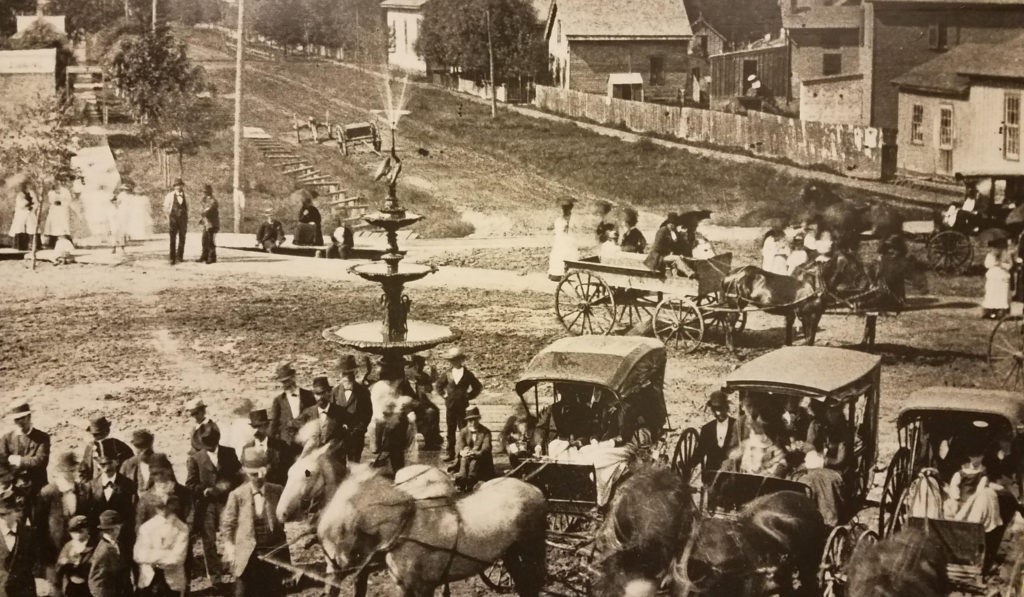
Photo: Fountain Square, July 4, 1876
Evanston’s history is closely tied to the founding of Northwestern University, which predates the City itself. In 1851, Methodist leaders selected land along Lake Michigan for a new university, and Northwestern University officially opened its doors in 1855. The growing campus quickly became the anchor for a developing community.
The area was originally known as Ridgeville Township, but in 1854 the university’s founders submitted plans for a new town to the county and proposed the name “Evanston,” honoring Dr. John Evans, one of Northwestern’s founders. Evanston was formally incorporated as a town in 1863 and later as a city in 1892.
Following the Civil War, Evanston experienced rapid economic and population growth. Between 1860 and 1870, the population nearly quadrupled, fueled by new rail connections, residential development, and the city’s reputation as a desirable place to live outside of Chicago. Evanston continued to grow while maintaining its independence, becoming known for its distinctive architecture, tree-lined streets, and stately lakefront homes. Another major period of growth occurred in the 1920s, when the population increased by approximately 70 percent.
Today, Evanston remains a vibrant, independent city with a rich blend of history, culture, and innovation. Home to Northwestern University, diverse neighborhoods, thriving business districts, and a beloved public lakefront, Evanston continues to balance its historic character with a forward-looking vision for the future.